AI consulting and custom software in Anchorage, Alaska.
K.AI Consulting is an AI consulting and custom software practice in Anchorage, Alaska. I build the tools Alaska labs, agencies and contractors can't buy off the shelf: field data apps that work without signal, internal tools and dashboards, data pipelines, and the regulatory and lab-data tooling that sits behind them.
Three kinds of work, then: I advise on where AI and software are worth the money, I build the tools for the gaps where there isn't an off-the-shelf answer, and I teach teams how to use AI on their own work.
How to work with me
Four ways in, all with the price agreed up front.
Every engagement starts with a 30-minute call about the workflow that hurts. You get a written scope, a fixed price, and a date before any work starts. Deposit on signing, balance on delivery.
Workflow Sprint
1 to 3 weeks · fixed fee
One paper form, spreadsheet or manual portal check, replaced with a working tool your crew can use the day it ships.
- 30-minute scoping call, written scope and price
- A deployed app, web or phone, offline-capable if the work needs it
- PDF or export output where a record has to leave the tool
- Documentation and a recorded handoff
Fits: a lab, crew or office with one bottleneck that everybody knows about.
Production Build
4 to 12 weeks · fixed scope, milestone payments
Multi-user software with the parts a production system needs: offline sync, roles and auth, alerts, integrations, reporting, App Store delivery.
- Scope split into milestones, each accepted on its own
- Server-side validation for anything a phone might miss
- Test data and a demo account before real data goes in
- Support window after launch, terms agreed up front
Fits: an operation that runs on the tool every shift, or a product you intend to sell.
AI Strategy and Advising
Scoped and priced on the first call
A plain answer on where AI is worth using in your operation: what to buy, what to build, and what to leave alone.
- A working session with the people who do the work
- A short written plan: what to do first and what it costs to keep running
- Which steps keep a person checking the output
- A second opinion on a vendor quote or product, if you have one
Fits: an owner or manager who wants a decision before spending anything.
AI strategy and consulting in detailTeam AI Enablement
90 minutes, half day, or full day
Your team, your real work, current tools. A primer for everyone, then hands-on sessions for the people who'll use it daily.
- Pre-workshop needs assessment
- Hands-on setup with your documents and data sources
- Custom prompts, templates and guardrails you keep
- 30 to 60 days of follow-up support
Fits: a team that wants to use AI on Monday without buying anything they don't need.
Primer and workshop agendasAfter launch: maintenance and small changes on a monthly retainer sized to the tool, or new features as a separate scoped engagement. Either way you choose, and either way it's in writing. How an engagement runs, step by step. AI strategy, primers and workshops in detail.
What people usually come in with
"We run on a paper form."
A phone or tablet app that follows the form, works without signal, and produces the PDF at the end of the shift. Dirt Burner Monitor
"Everything lives in one spreadsheet."
A proper tool with the same logic, checked line by line against the spreadsheet before anyone switches over. Lab Data Review Tool
"We need an app for the crew."
Native iPhone apps, and web apps that install to a phone, with an offline copy for when the signal drops. Whumpf
"Somebody checks ten websites every morning."
A pipeline that reads the sources on a schedule and puts what matters in one place, current and searchable. AK RFP Hub
"We need a dashboard."
One screen that shows where things stand right now, fed by the systems and instruments you already have. Dixon Glacier Model Workbench
"Writing the report takes longer than the work."
Word and Excel reports generated from the data you already collect, in the format the agency expects. Lab Data Review Tool
"We have a model or an analysis stuck on one person's laptop."
Scientific code made reproducible, documented and public, with the data and assumptions shown next to the answer. Dixon Glacier Model Workbench
"We have an idea for a product."
Built, launched and taking subscriptions, with payments, accounts and a daily data refresh. AK RFP Hub
"We want to use AI and don't know where to start."
A strategy session on your real workflows and a short written plan: what to buy, what to build, what to leave alone. AI strategy and consulting
"The team needs AI training."
A 60 to 90 minute primer for everyone, or a half-day or full-day hands-on workshop on your own documents. Primers and workshops
Custom Tools & Applications
I build production tools for field crews, labs and offices: data capture that works without signal, dashboards people actually open, and pipelines that pull scattered sources into one place. With AI-assisted development I move fast: the Groundwater Monitoring App went from concept to deployed PWA in 11 hours.
I use AI primarily for software development. Some of what I build uses AI at runtime, some doesn't. When AI isn't in the product (a field PWA, an iPhone app, a glacier model), all the iteration happens during the build, and what gets shipped is traditional, deterministic software. When AI is in the product (a regulation simplifier, a forecast summarizer), it's because that's the right tool for the job. Even then, it's not free-form. I use skills.md files, system prompts, and reference documents as guardrails, so the AI only does the specific job it was given with the source material it's been told to use.
Whether you need a field data collection app, an interactive dashboard, or a way to modernize a legacy workflow, let's talk about what you have in mind and I'll build it.
Recent Builds
Some of these are written up in full over on the case studies.
Avalanche Forecasting
Live, public-facingOperational dashboards for avalanche centers and a real-time conditions summary aggregating CNFAIC and Hatcher Pass forecasts. Multi-point simulation, stability heatmaps, stratigraphy profiles, and forecast scoring. Built in formal partnership with Beaded Cloud, where safety depends on accuracy.
Glacier Modeling & Field App
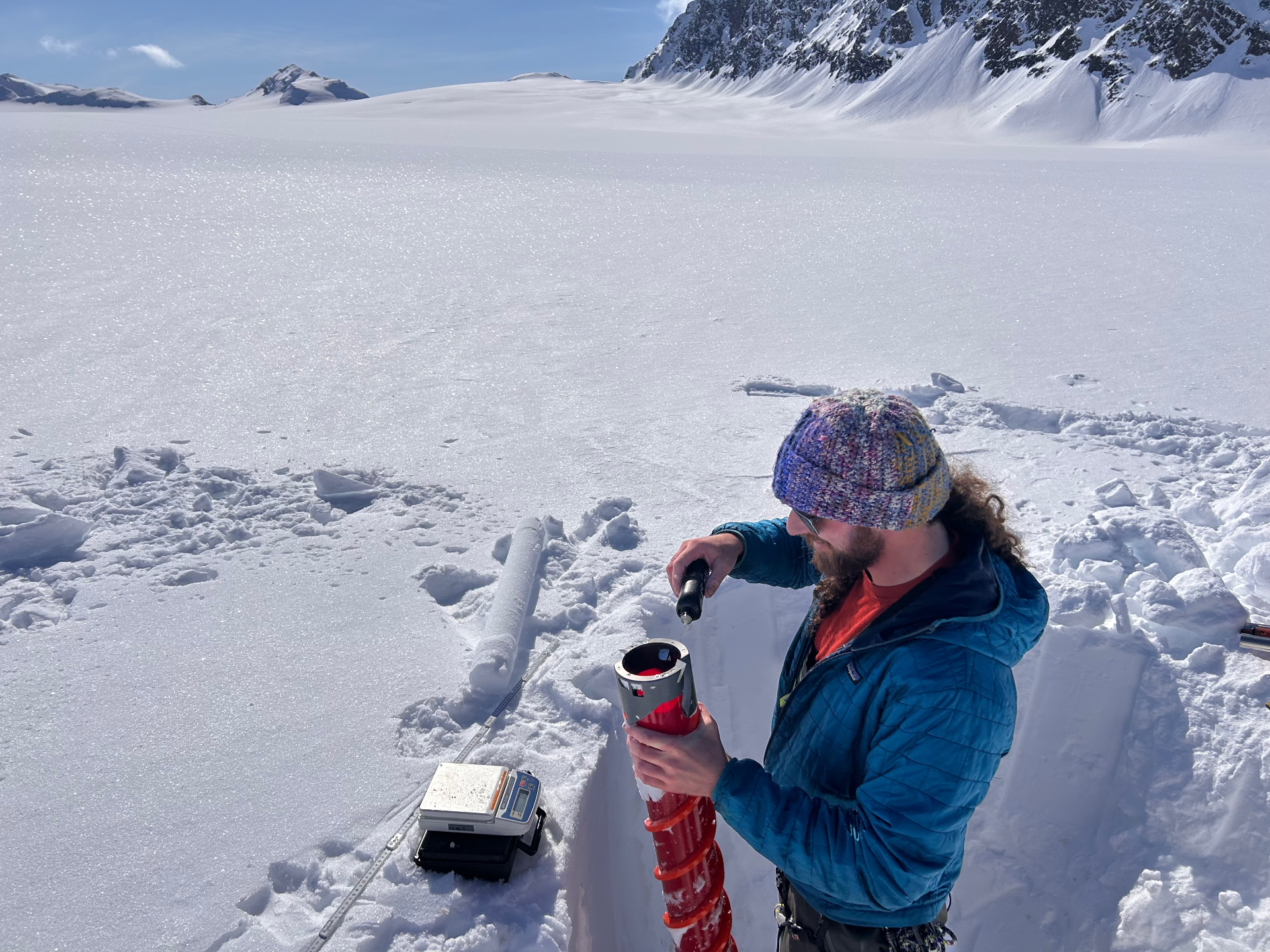
Spec to TestFlight in days; physics to ensemble in weeksiPhone app that replaced APU's paper field book for spring snow-coring on the glacier, computing snow water equivalent in real time. Paired with a Bayesian-calibrated melt model (emcee MCMC, JIT-compiled hot loops, ensemble projections across SSPs and GCMs) inspired by the DETIM physics.
Groundwater Monitoring
11-hour POC to multi-site platformOffline-first field PWA for well monitoring with automatic PDF reporting, then evolved into a multi-site Supabase platform with auth, workplan upload, and auto-extraction. The first version went from concept to deployed PWA in 11 hours.
What you get, every time
Standard stacks, no black boxes
React, Supabase, Expo, Cloudflare, Python. Any competent developer can pick the code up, so you're never dependent on one person.
Your data and your logic stay yours
Your records, your proprietary methods and your if-then rules are your IP. Licensing and a source buyout option are written down before work starts.
Documentation and a recorded handoff
Every build ships with a written guide and a walkthrough recording for whoever runs it next.
Deterministic by default
What ships is ordinary, testable software. AI runs inside a product only when it's the right tool, and then with fixed source material and guardrails.
A fixed price and a date
Written scope, fixed fee, deposit on signing, balance on delivery. Changes go through a short written change order.
Someone who has done the fieldwork
Contaminated-site investigations, glacier field seasons, ski patrol. I build for the conditions the work actually happens in.
Questions people ask first
Where do you work?
Anchorage, Alaska, and remotely across the state. On site for kickoff and training when it helps.
Who do you build for?
Environmental labs and remediation contractors, agencies and utilities, research groups, avalanche centers, and small operators who run on paper or a spreadsheet nobody trusts.
How fast is fast?
A sprint ships in one to three weeks. A production build runs four to twelve. A first working version of a groundwater field app took eleven hours; the multi-site platform it became took longer.
What does it cost?
Sprints are fixed-fee and quoted on the first call. Production builds are fixed scope with milestone payments. Support is a monthly retainer sized to the tool. No hourly surprises.
What if you're out of reach on a glacier?
The code is in standard stacks with documentation in your hands. You are never locked to me, and support terms cover who answers when.
Do you use AI to build?
Yes, heavily, which is why builds are fast. What ships is deterministic software unless AI is the right tool for the job, and then it runs with guardrails.
Can I hire you for AI strategy without a build?
Yes. A strategy engagement ends with a written plan you can act on with anyone. If part of it turns out to be worth building, that's a separate scope and a separate decision.
Are you a consultant or a developer?
Both. I scope the problem with you, then I write the software. There is no handoff between the person who listened and the person who built.
Book a 30-minute workflow call
Bring the paper form, the spreadsheet nobody trusts, or the portal somebody checks by hand. You'll leave the call with a straight answer on whether it's worth building, roughly what it would cost, and how long it would take.